PART 3 – What the Sea Gives Back
Olivier opened the door wider and stepped back.
‘Come in,’ he said. His voice was slightly husky, somewhere between Scottish and something else. ‘You’re shaking on your feet.’
‘I’m all right,’ Lara said automatically. But as she crossed the threshold she realised how tired she really was. Her legs felt heavy, her head light.
The hall smelt of coffee, damp wool and a faint trace of peat smoke. On the coat rack hung a dark raincoat, an old fisherman’s cap, a scarf in the MacLeod tartan.
Ewan shut the door behind them and lingered by the wall, as if he didn’t want to intrude too fast.
‘You two know each other?’ Lara asked, unzipping her coat.
‘We all half-know each other,’ Olivier said. ‘That’s the curse of an island. I’m Olivier.’ He held out his hand. ‘But you knew that already.’
‘Lara,’ she said. ‘But you knew that too, apparently.’
He gave a brief smile, but his eyes stayed serious. ‘You do look like Jan, yes. Especially around the mouth. He had the same expression… like he was holding something back behind his teeth that he wasn’t ready to say.’
‘That’s accurate,’ she said quietly.
‘Come on,’ he said. ‘The sitting room’s warmer. And I’ve got coffee. Or tea. Or… something stronger.’
—
The sitting room had large windows looking over the valley and, further off, a sliver of sea like a strip of silver. Stones, shells and a few old Polaroids lay on the sill. The sofa was draped with a rough blanket, a worn rug on the floor.
Olivier gestured to the sofa. ‘Sit. You too, Ewan. Don’t pretend you’re just the driver.’
He put three mugs of coffee on the low table, next to a tin of biscuits.
Lara took the notebook from her bag and laid it in front of her, but didn’t open it yet. She needed to hear his voice first. His version.
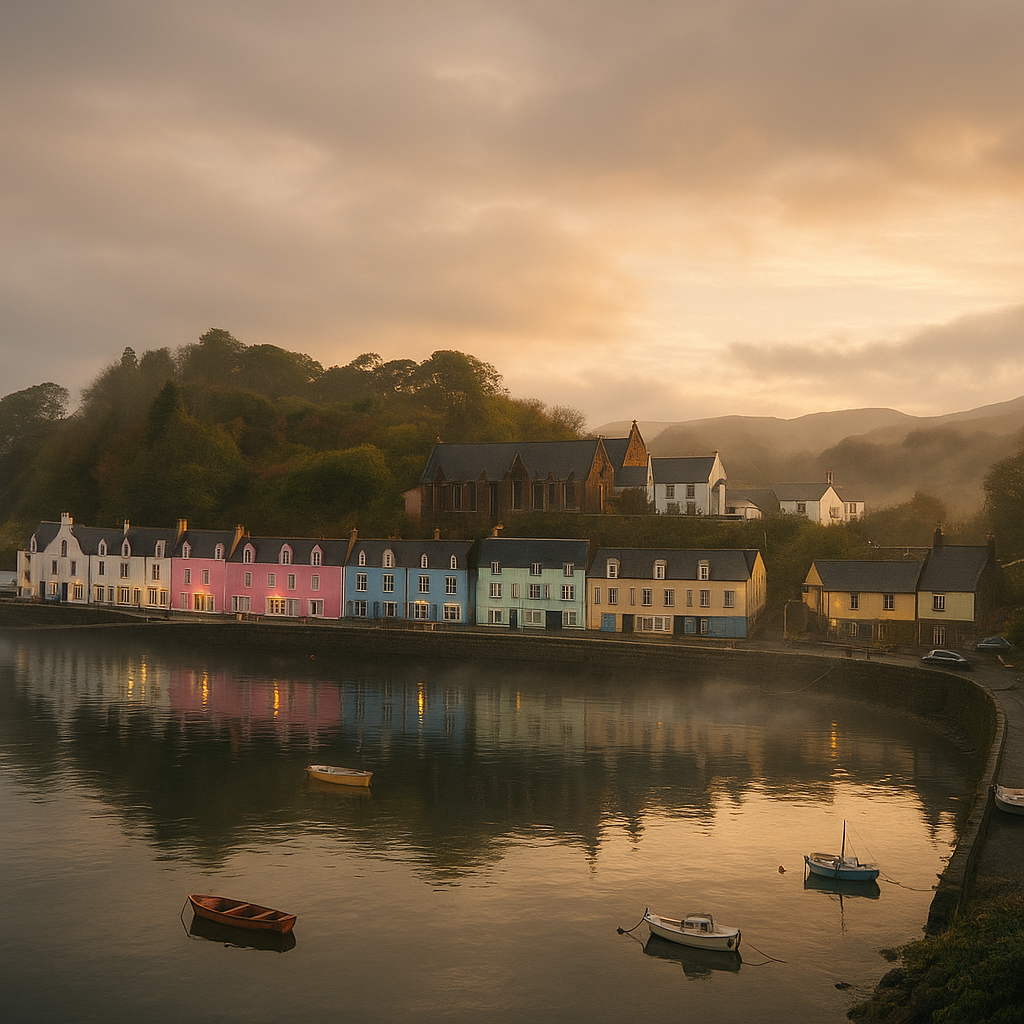
‘You were here… when Jan was on Skye,’ she began. ‘You had breakfast with him in Portree.’
Olivier nodded slowly. ‘Fiona’s place,’ he said. ‘I’d just come back to the island after thirty years in Australia. Everything smelt different, but the air felt the same. Like opening a book again where you’d stopped at chapter three.’
He ran his thumb along the mug’s handle. ‘Jan came down with a rucksack that made you think: either he’s totally naïve or he knows exactly what he’s doing. We got talking about photos. He had his camera with him, showed me a few shots from the Highlands.’
‘And?’ Lara asked.
‘He had an eye,’ Olivier said. ‘Not just for the dramatic things. For small stuff too. An empty bus shelter in the rain, a crooked post with a faded sign. He looked like he was always searching for the edge of the story.’
It hurt, and yet the description felt like a hand resting on her shoulder.
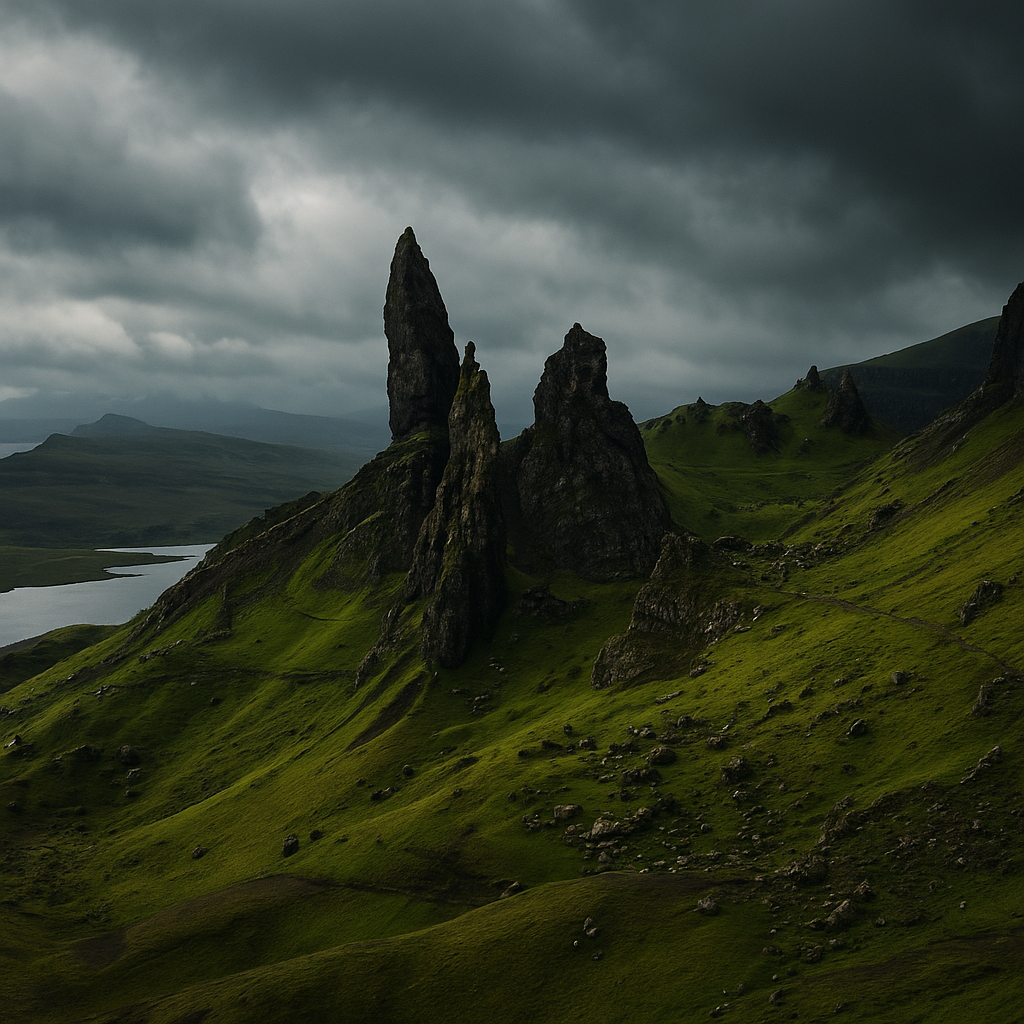
‘He said he wanted to go to the Storr,’ Olivier went on. ‘And then along the ridge to the Quiraing. He asked if he was mad to go alone, with the weather like it was.’
‘What did you say?’ Ewan asked.
‘I said he wasn’t mad,’ Olivier said. ‘But that he needed to listen to the hill. And to his own limits. And if he found someone on the way who wanted the same path, he should take the chance.’
He drank, then set the mug down.
‘Did you go with him?’ Lara asked, leaning forward.
Olivier looked at the window, as if the answer were out there.
‘Partly,’ he said. ‘I had my own plans. I wanted to come back here to Glendale, to this valley, to decide whether I wanted another chapter here or to stay in Australia for good. But when he stood up from the table I thought: I can give him a first day with a local voice in his ear. After that he has to choose for himself.’
He took another breath.
‘We drove up to the Storr together,’ he said. ‘In my hire car. He took pictures on the way of mist over the Sound of Raasay, of sheep in the road. He talked about you, by the way.’
Lara’s throat tightened. ‘About me?’
‘About a little sister who always asked “and then?” when he came home from school,’ Olivier said. ‘And that he was finally collecting stories big enough for all your “and thens”.’
She swallowed. Jan, missing her annoying questions. It hurt and comforted at the same time.
‘We did what you did yesterday, I think,’ Olivier said. ‘Walked up, to the ledge, to the balcony where everything opens out. He was quiet. Very quiet. Not like in the car. Then he kept talking.’
‘And then?’ Lara asked, without irony.
‘Then he asked if I’d go further up the ridge with him,’ Olivier said. ‘Along the Trotternish crest to the Quiraing. I said: not today. Not with those clouds. Not with two people who’d only known each other a morning.’
‘But he wanted to,’ Lara said.
‘He wanted everything,’ Olivier said softly. ‘Not recklessly, but urgently. As if he was afraid that if he didn’t go now, he never would.’
‘And you?’ Ewan asked. ‘Where did you go?’
‘I walked back down to the car,’ Olivier said. ‘He came a bit of the way with me. At a fork we made a plan. He’d go up onto the ridge to a certain point, then come down to the road by a gate, where I’d pick him up later. We set a time. Weather permitting.’
‘Did you tell the police that?’ Lara asked. There was an edge to her voice. ‘About that arrangement?’
‘Yes,’ he said. ‘All of it. They mapped my whole route. Checked my hire car. My boots. My jacket. As if I’d… as if I’d…’ He closed his eyes briefly. ‘I understand. They had to. But yes, I told them. Everything.’
‘And you didn’t see him again,’ Lara said. It wasn’t a question.
Olivier shook his head. ‘The clouds closed in. The wind shifted. I stood at that gate at the agreed time. An hour. Two hours. Nothing. At first I thought: maybe he came down earlier, maybe he hitched a lift with someone else. By the time I got back to Portree and he wasn’t at Fiona’s, I knew something was wrong.’
He put the mug down. His hand was trembling.
‘Next morning the police were at breakfast,’ he said. ‘Fiona was pale. People had already been up on the hill. They asked me if I’d seen him. I told them I was the last one, as far as I knew. Then everything… turned into the wrong sort of film.’
Lara looked at the notebook. ‘How is it that you wrote something in his book?’ she asked. ‘Or someone did. There are extra notes under his line.’
She slid it towards him and opened the page.
Olivier bent over it. His eyes traced the words.
North ridge – Storr – Quiraing – Uig – Fairy Glen – last bus?
Neist.
He nodded slowly. ‘That’s my handwriting,’ he said. ‘After… after everything. Months later. I came back. I couldn’t…’ He searched for the word. ‘I couldn’t bear that one line standing there on its own. As if he’d only been poetry. So I wrote down what we’d talked about that morning. The route. The logic. Where he wanted to go.’
‘And Neist?’ Lara asked.
Olivier’s smile flickered. ‘He asked me on the way up, “If you had to choose one place on Skye to decide what to do with your life, where would you go?” I said: “Neist Point. If you stand there, everything before that either makes sense or feels pointless. But it’s clear, at least.” He just wrote “Neist” in his own notebook. I added it here later, to mark that… that that would have been his final point, I think. If he’d made it that far.’
‘But he didn’t,’ Lara said. ‘Not the way it was meant.’
‘We don’t know that,’ Ewan said softly. ‘We only know where he was no longer seen.’
—
‘What do you think happened?’ Lara asked. ‘Not as a witness. As a person.’
Olivier let his head rest against the back of the chair. He looked at a hairline crack in the ceiling.
‘I think he fell,’ he said. ‘Not somewhere dramatic, not in some gorge with a name. Just, on a wet patch of grass, in mist. You lose the path, think you’ve found it again, step wrong. And if no one sees… it becomes a story with too many blank pages.’
‘But there were searches… dogs, helicopters…’ Lara began.
‘Skye is big and rough,’ Ewan said. ‘There are places you could walk twenty people past and still miss something. Especially in low cloud, or if chunks of rock have broken away after winter. It’s not a park. It’s an old animal that carries on, with or without us.’
‘That’s the version I can live with,’ Olivier said. ‘No malice, no intent. Just a mistake. But there’s something else…’
He leaned forward, elbows on his knees.
‘That morning at the gate,’ he said. ‘When I was waiting, in the mist, I heard something. Snatches of a voice. Not close enough to make out words. Close enough to know someone was there. I shouted. Nothing came back. Just the wind.’
‘Why didn’t you tell someone straight away?’ Lara asked.
‘I did,’ he said. ‘But by the time the police were there, the weather had shifted. The mist was thicker, the visibility worse. All I could say was: I heard someone. That’s not much when you don’t have a direction. Or a face. It could have been another walker. Or… my imagination.’
‘But you think it was Jan,’ Lara said.
‘I’m old enough to know when my imagination’s lying to me,’ he said. ‘This was real. I still sleep badly because of it.’
Lara clenched her hands into fists. ‘So he was close. And yet…’
‘…and yet no one got there in time,’ Olivier finished. ‘That’s the worst of it. Not what happened, but that he may have known he was alone.’
For a while the only sound was the soft tick of the clock on the wall. Outside, the wind keened along the side of the house.
Olivier drew a breath and laid his hand on the notebook.
‘That line of his,’ he said. ‘“When the sea remembers, follow the last light.” Have you ever worked out where he got it from?’
Lara shook her head. ‘He wrote half-lines more often,’ she said. ‘Snatches of songs, bits from books, his own phrases. But this one… stood alone. No context.’
‘It’s a twisted version of something my grandfather used to say,’ Olivier said. ‘He was a fisherman here in Glendale. If a boat went down and the sea gave nothing back for months – no wreckage, no bodies – he’d say: “The sea remembers in her own time. Watch the last light, that’s where the souls rest.” I told Jan that once, over breakfast. About the way people here talk about the sea, as if she has a memory.’
‘So it was your line,’ Lara said. ‘And he… carried it off.’
‘And the other way round,’ Olivier said. ‘He brought it back to me, in a way I never asked for.’
He looked at her. ‘That’s why I didn’t want that sentence living only in his book and my head. That’s why it’s in Fiona’s guestbook now too. So other people see it. Maybe they’ll think about it. Maybe they’ll look after each other better on the hill.’
Lara stared at the words, at the blend of Jan’s and Olivier’s handwriting. The cryptic line that had held her at arm’s length from any real answer for years suddenly had a source. A story. Not magical. Human.
‘If you see it like that,’ she said, ‘why does it still feel so unfinished?’
‘Because he never got to Neist,’ Olivier said. ‘Not consciously, at least. And to be honest… neither have I, since then. I haven’t been back there. It feels like that place belongs to him now. An unfinished chapter.’
Ewan pushed his chair back. ‘Then that’s our job,’ he said. ‘Not to beat the hill, not to wring anything out of the sea. But to finish that line.’
He looked at Lara. ‘We’re going to Neist Point. Today. With your stone from the Fairy Glen and this book. And with your grandfather’s words in our heads.’
He smiled briefly at Olivier. ‘And if you’d like to come…’
Olivier looked at the window, where a patch of light had opened in the cloud.
‘I’ve refused for years,’ he said. ‘But maybe this is exactly what I need to sleep again.’
—
The road to Neist Point was narrow and twisting. They drove south from Glendale, past low walls and fields full of sheep. The sea appeared now and then between the hills, dark and restless.
Lara sat in front, next to Ewan. Olivier sat in the back, silent. His hands rested on his knees, clenching now and then.
‘How far is it?’ Lara asked.
‘Twenty minutes,’ Ewan said. ‘We drive to the car park at the end of the road. From there it’s a path with steps, along a steep slope, down to the lighthouse.’
‘And the light?’ she asked. ‘Will there be… last light?’
‘If the clouds play nice, we’ll get a sun that breaks through the gaps,’ he said. ‘Neist is famous for its sunsets. But even without sun the light there is odd. As if it’s coming from somewhere else.’
They crawled up the last hill. The road ended abruptly at a car park on a cliff. Only a few cars stood there. The sky was still grey, but on the horizon a paler strip showed.
Lara got out. The wind hit her face at once, hard and salty. Every breath tasted of sea; she felt it in her throat and on her lips.
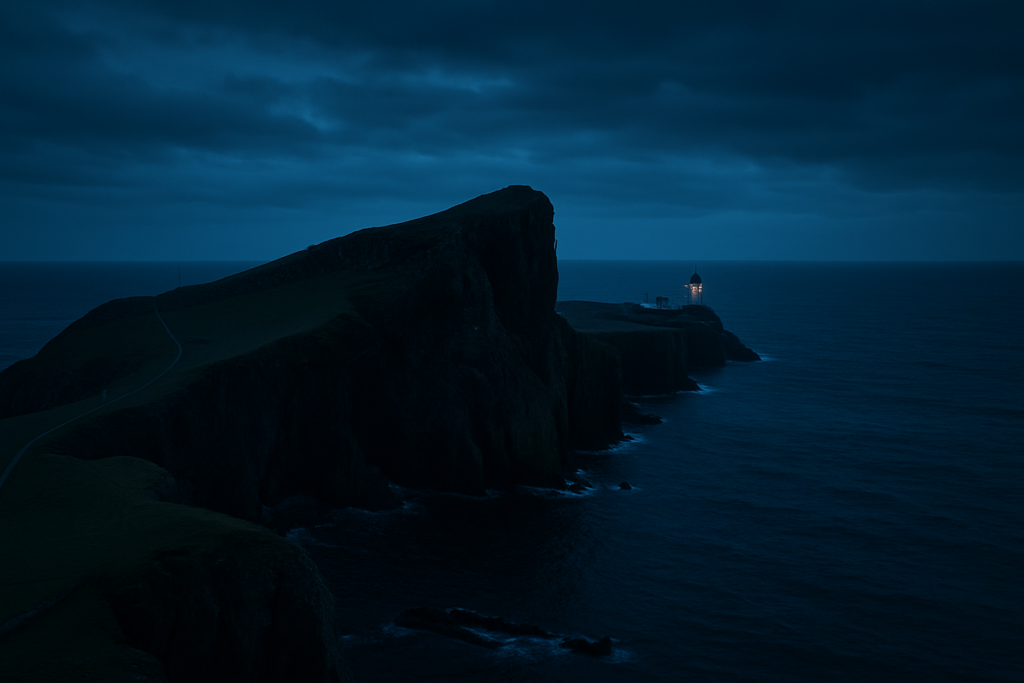
Ahead of them, lower down, she saw the tongue of land reaching out into the Atlantic: a narrow green spine ending in a rock platform with a white lighthouse and a handful of buildings. Sheer cliffs dropped on both sides straight into the sea. Waves crashed against the rock and flared into white.
‘There you are,’ Ewan said. ‘Neist Point.’
Lara swallowed. The Fairy Glen stone was in her pocket. The notebook in her rucksack.
‘Are you ready?’ Olivier asked.
‘No,’ Lara said honestly. ‘But that doesn’t seem like the right criterion.’
They set off. First along a metal fence, then down a long flight of concrete steps. Her knees protested, but her head felt oddly clear. The wind whistled along the rails. The sound of water was everywhere, far-off and close at once.
After the steps the path hugged the slope. Steep grass rose on the left, a sheer drop yawned on the right. The path was wide enough for two, but Lara walked in the middle, her eyes still stealing glances at the edge.
They passed a slab of rock where a cableway had once been fixed; only rusted remnants remained. A gull wheeled overhead, its cry tearing through the wind.
Near the lighthouse the path levelled out. The structure itself was modest: a white cylinder with a yellow lantern room, attached to a row of low white buildings. Paint flaked here and there, but everything looked solid. Beyond it there was only sea, up to a blurred line where water and sky met.
‘So this is it,’ Lara whispered, mostly to herself.
They walked to the plateau’s edge, where the cliffs fell in sharp steps into the water on both sides. The rock under her boots was cold and slightly damp. Wind lashed her cheeks, her eyes stung.
‘When I was a boy,’ Olivier said, ‘my grandfather brought me here. He said, “This is where the land ends, but not the story. The sea writes the rest.”’
Lara took the notebook from her bag. The pages rustled in the wind. She opened it at the line.
When the sea remembers, follow the last light.
She read it aloud. The words sounded different here. Less like a riddle, more like an instruction.
‘The sea doesn’t forget,’ she said. ‘We’re the ones who forget. Or try to.’
Ewan stood a little behind her, hands in his pockets. Olivier came to stand beside her, at a safe distance from the edge.
‘What did you want to do here?’ he asked. ‘When you decided to follow his route?’
‘I wasn’t sure,’ she said. ‘At first I thought: find answers. But the closer I got to this point, the less that felt like the goal. Maybe… I just wanted an ending that wasn’t made of silence.’
She felt the stone in her palm. She took it out. The smooth, flat pebble from the Fairy Glen, light grey with a thin white vein.
‘I found this there,’ she said. ‘It felt… like some kind of key. Or something waiting.’
She walked to a safe spot near the edge, where the rock formed a small shelf. She knelt. The wind tugged at her hair, blew a strand across her face.
‘What are you doing?’ Ewan asked.
‘Nothing dramatic,’ she said. ‘I’m not going to throw it off the cliff in slow motion.’
She laid the stone on the ledge, not too near the drop. She tore a blank page from the notebook, her hand steady, and wrote:
Jan – we walked your route.
The sea hasn’t given anything back, but we have.
We’re taking your line home.
Underneath she wrote her name. And, after a moment’s pause, the names Ewan and Olivier.
She folded the page as small as she could and tucked it under the stone, wedging it in place. No bottle, no monument. Just paper and stone in a place the wind always finds.
‘The sea doesn’t read English,’ Olivier said quietly.
‘Then she’ll read our footsteps,’ Lara said. ‘That we came. That we didn’t leave you to the mist alone.’
She stayed there for a moment. The sky was starting to crack open; through the cloud cover a strip of light fell on the horizon. The light was soft gold, briefly, before it slid behind a cloud again.
‘Last light,’ Ewan said. ‘Not quite, but a rehearsal.’
Lara stood. She looked at the line where sea and sky met.
‘You said your grandfather reckoned souls rest where the last light is,’ she said to Olivier.
‘Yes,’ he nodded. ‘But he also said they were just words to live with the pain. He lost three friends in one storm. If you don’t make stories then, you drown on the inside.’
‘Maybe I’ve spent seven years trying to live without a story,’ Lara said. ‘Just with facts and blanks. Maybe that’s why I could never put that book away.’
She closed the notebook and slipped it carefully back into her rucksack.
‘And now?’ Ewan asked.
‘Now I’ve got a beginning, a middle and an end,’ she said. ‘No plot twist, no hidden killer. Just a boy, a hill, a mistake, an island too big to keep every trace. And people who remember.’
She looked at Olivier. ‘And someone who was there. Who waited. Who’s carried more guilt than is his.’
His eyes shone, but he didn’t blink it away. ‘I haven’t given you anything that brings him back,’ he said. ‘Only my share of the emptiness.’
‘That’s already so much more than nothing,’ Lara said. ‘Now it isn’t just our emptiness. He’s touched more people than I knew. That makes him… bigger than his disappearance.’
She turned back towards the sea one last time. Waves smashed against the cliffs below, an endless motion of coming and going. On the horizon another narrow band of light broke through. For a moment it looked exactly like the edge of a page.
‘When the sea remembers something,’ she said softly, ‘that’s not on me. But I can choose what I remember. And how.’
—
On the way back she walked a little slower. With every step up the stairs she felt the weight of the moment shift, slightly, from her shoulders. Not because it was lighter, but because it was shared.
At the top, by the car park, she paused and looked back. The lighthouse was small now, almost like a model. The sea beyond was a flat grey field with little white flecks.
‘What will you do when you go home?’ Ewan asked, unlocking the car.
‘Sleep, first,’ Lara said. ‘Then… maybe write. Not just about him. About Skye. About the Storr, the Quiraing, the Fairy Glen, Portree, Glendale, Neist. About what it’s like to visit a place your brother chose as his last.’
‘You’re not going to turn him into a saint?’ Olivier asked.
‘No,’ she said. ‘He was stubborn. Messy. He replied late to messages. He forgot birthdays. But he did have the courage to come here. I don’t want the story that stays to be only about his vanishing, but also about his seeing. About what he saw.’
‘If you ever want to put a photo of him in Fiona’s guestbook,’ Ewan said, ‘I’ll make sure there’s space. Between the lines.’
‘And if you ever want to come back,’ Olivier said, ‘you know the way. Glendale’s not going anywhere. Neither am I, any time soon.’
She laughed softly. ‘I thought everyone on Skye was constantly on the move.’
‘Only in our heads,’ he said.
—
That evening, back in Portree, she sat again at Fiona’s round table. The guestbook lay open at the 2017 page.
Jan Keller – Germany.
Olivier Hart – Australia/Scotland.
Fiona sat opposite her, a mug of tea in her hand.
‘Well?’ she asked. ‘Has the sea given anything back?’
‘No miracles,’ Lara said. ‘Words. A route. A place to let go without forgetting.’
She took a photo from her bag. A print she’d had made before she left: Jan on a bench in Berlin, laughing, hair blown wild, camera in his hands.
‘May I…?’ she asked.
Fiona nodded. ‘I’ve already made room.’
By the photo Lara wrote, in neat letters:
Jan Keller (1994–2017?) – Germany
Loved stories, light and mountains.
Last seen chasing all three on Skye.
Below, smaller, she added:
His sister walked his route. Skye remembers with her.
Fiona read it and laid her hand on Lara’s wrist. ‘Now he doesn’t just belong to the files,’ she said. ‘Now he’s ours too. Everyone who flicks through here and wonders who he was.’
Lara smiled. ‘That’s exactly the idea.’
—
The next morning she took the bus back to the mainland. By the Skye Bridge she looked back one last time. The hills lay half hidden in cloud, but there were gaps where light slipped through.
She took out the notebook. On the first page his line still stood.
When the sea remembers, follow the last light.
Under it, in her own hand, she wrote:
Until then, follow the stories.
They’re the lights we can choose.
She closed the book and tucked it into her bag. Outside, the bus rolled onto the bridge, away from the island, back to the mainland. But somewhere between the pages, between the wind above Neist Point and the stones in the Fairy Glen, she felt that part of her and Jan now rested in the same place.
Not as a ghost between the cliffs, but as a story that had found its ending. Painful, yes. But rounded enough not to gnaw.
As the bus left the island behind, she didn’t think: what have we lost?
She thought: that’s where I need to send people.
To the Storr, where a stone old man has outstared the centuries.
To the Quiraing, where the earth has peeled itself open into an amphitheatre.
To the Fairy Glen, where a small pebble under an unremarkable stone might be hiding a folded page.
To Glendale, where a man with grey curls still looks out to sea and sometimes thinks of a young German.
And to Neist Point, where the last light is not only for souls, but for those left behind.
Skye was no longer just the backdrop to Jan’s disappearance. It was also the island where she had learnt how you can have a complete story, even when the body is missing.
And somewhere high above the cliffs, the wind seemed to carry a familiar question:
‘And then?’
This time, she had an answer.



 About FavouriteDestination